Another Research Stay in Edinburgh: Nathalie Shares Her Research Insights
Nathalie Idlin from the Laboratory of RNA-Protein Interactions is another participant in the research stay at the Institute of Genetics and Cancer at the University of Edinburgh, carried out within the framework of the Race project.
She shared the following about her research: “We aim to develop an efficient and reliable experimental model to investigate the role of HuR (ELAVL1) in modulating the RIG-I/type I interferon (IFN) signaling pathway which is essential for antiviral responses. Our study will involve testing a wide range of compounds designed to disrupt HuR-RNA complexes, investigate their molecular mechanisms and cellular consequences. Our final step will be to identify novel therapeutic strategies targeting viral infections and autoimmune disorders. To achieve rapid and acute depletion of HuR we plan to use the dTag system that offers advantages over traditional knockout methods (e.g., minimizing cellular adaptation of the cell to the knockout).”
She also emphasized that the research stay in Edinburgh is particularly valuable to her, since Dr Andrew Wood, the group leader at IGC, specializes in genome editing and targeted protein degradation.
The main objective of Nathalie’s visit is to learn how to efficiently generate a homozygous population of cells using CRISPR- HOT strategy. This system increases genome editing efficiency by using homology-independent-based strategy. Nathalie explained that during her first years of work, she had been able to obtain a homozygous population of HeLa cells containing the insertion of FKBP12 at the C-terminus of HuR. She added that she had been using a conventional HDR approach at that time, wchich was not very efficient and required a considerable amount of time.
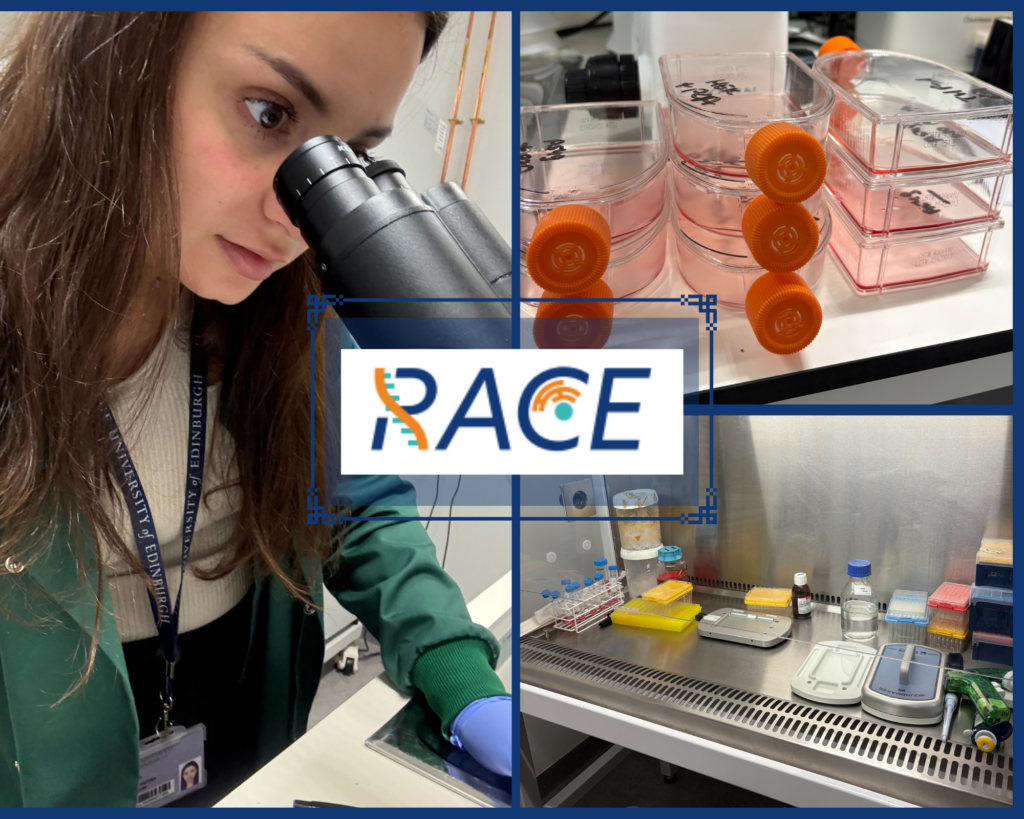
The research stays in Edinburgh support the objectives of the RACE project (WP2 – Researcher training).